Weekly Scheduled Calorie Restriction
Think budget, not test. A weekly calorie budget gives you flexibility for real life while maintaining a consistent deficit.
Here's a powerful reframe: think about your calorie budget weekly, not daily. A weekly budget of 12,000 calories (for example) gives you flexibility to have lighter days and slightly heavier days without feeling like you've "ruined" anything.
How It Works
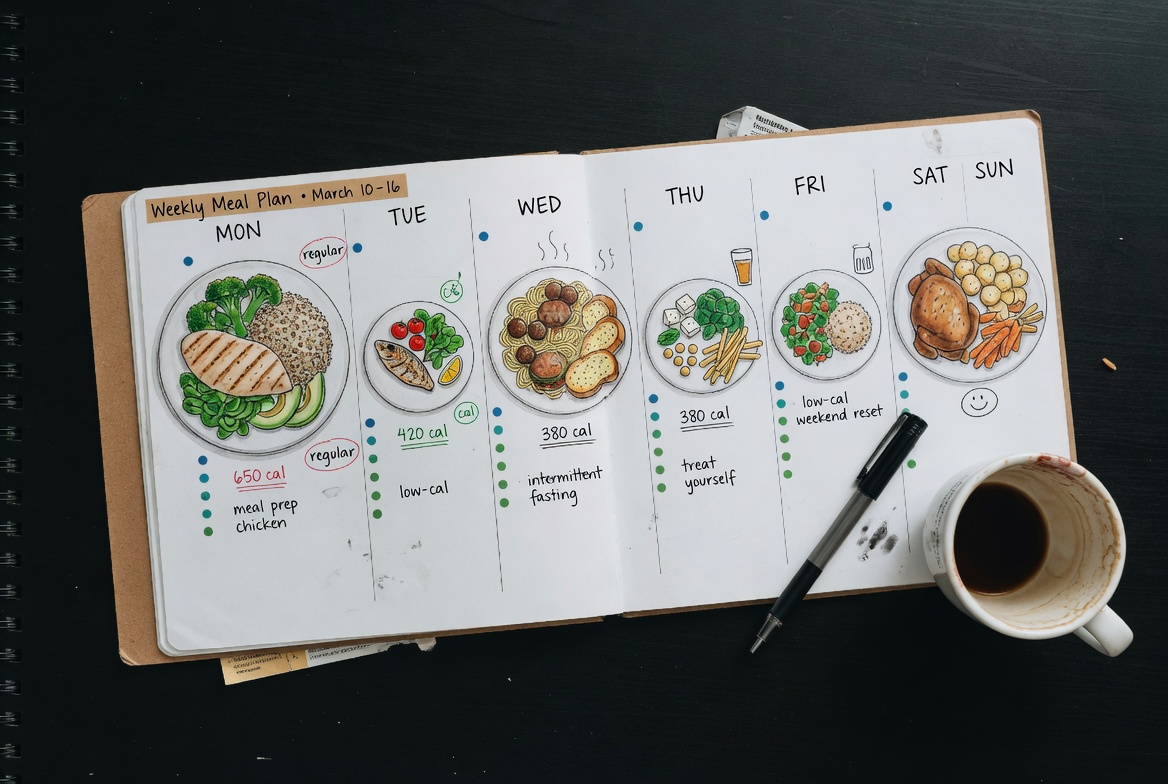
| Day | Strategy | Calories |
|---|---|---|
| Monday | Low day — light meals, high protein | 1,200 |
| Tuesday | Normal day | 1,800 |
| Wednesday | Low day | 1,200 |
| Thursday | Normal day | 1,800 |
| Friday | Normal day | 1,800 |
| Saturday | Flexible day — social meals OK | 2,200 |
| Sunday | Low day — reset | 1,200 |
| Weekly Total | 11,200 cal | |
Daily Calorie Distribution
Weekly avg: 1,600 cal/day · Weekly total: 11,200 cal
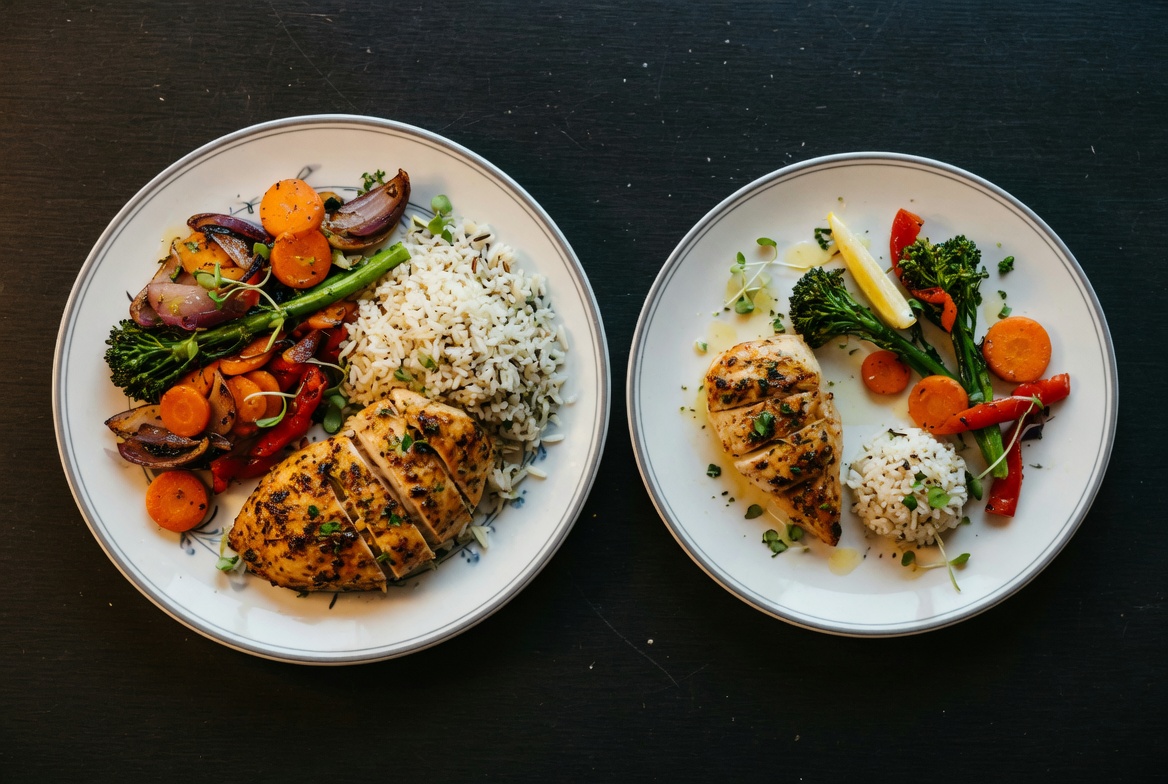
This models a sustainable deficit while allowing real-world flexibility. The "low days" aren't starvation — 1,200 calories is two solid, protein-rich meals. The "flexible day" gives you permission to enjoy a social dinner without guilt.
Why It Works Psychologically
💡 Budget vs. Test Mentality
Daily calorie counting creates a "pass/fail" mentality — one bad meal and the day is "ruined." Weekly budgeting eliminates this. Had a big lunch? Eat lighter at dinner. Had a heavier Saturday? Two low days this week instead of one. It's a budget, not a test.
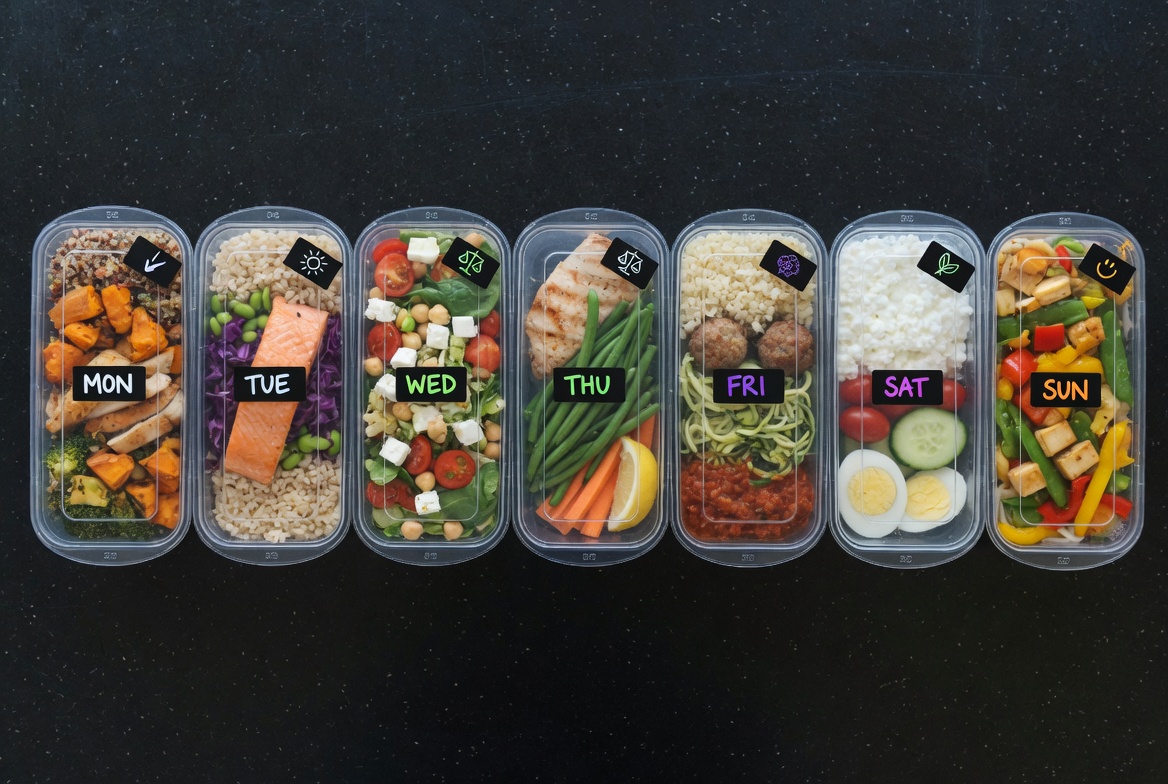
Building Your Own Weekly Plan
- Calculate your weekly target. Take your daily TDEE minus your desired deficit, then multiply by 7. For example: 2,200 TDEE - 500 cal deficit = 1,700/day × 7 = 11,900/week.
- Assign day types. Mark 2-3 days as "low" (TDEE - 800-1000), 3-4 days as "normal" (TDEE - 400-500), and 1 day as "flexible" (TDEE - 0-200).
- Align with your social calendar. Put the flexible day where you have dinner plans, date night, or family meals.
- Low days = high protein. On low days, 50%+ of your calories should come from protein. This prevents muscle loss and keeps you full despite lower intake.
- Track weekly totals, not daily perfection. The weekly number is what matters for fat loss. Daily fluctuations are irrelevant.
What a Low Day Actually Looks Like
1,200 calories sounds extreme until you see it mapped out:
- Meal 1 (noon): 6 oz chicken breast + large salad with vegetables + 1 tbsp olive oil dressing = ~450 cal, 40g protein
- Meal 2 (6 PM): 2 eggs + 4 oz ground beef + steamed broccoli + small sweet potato = ~650 cal, 45g protein
- Snack (optional): Greek yogurt (100 cal, 17g protein)
- Total: 1,200 cal, 102g protein. You will not be starving.
Tools That Help
Greater Goods 22 lb Food Scale
22 lb capacity, 1 g steps, grams. Essential on low days, when guessing a portion throws the day off.
View product →Weekly Meal Planner Notepad
Map out your low, normal, and flex days for the week. Tear-off sheets make it easy to plan each week fresh.
Shop on Amazon →Measuring Cups & Spoons Set
Quick-reference portion control for cooking oils, dressings, and dry goods — the invisible calories that derail low days.
Shop on Amazon →High-Protein Cookbook
Low days need high-protein recipes that are genuinely satisfying at 400-600 calories per meal.
Shop on Amazon →As an Amazon Associate, I earn from qualifying purchases. Product links on this page are affiliate links — they cost you nothing extra.