Low-Calorie, High-Volume Foods
These foods let you eat large portions while staying in a caloric deficit. Volume eating is how you diet without feeling like you're dieting.
The Volume Eating Strategy
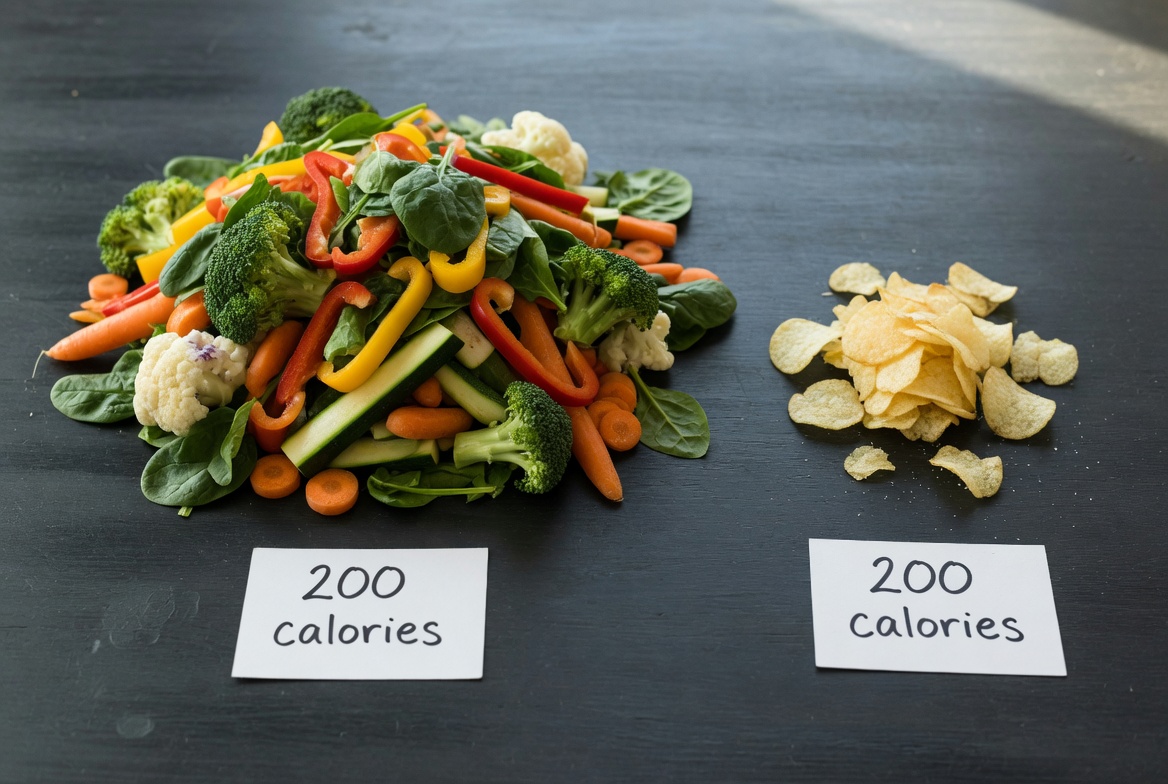
The biggest reason diets fail is hunger. If you're constantly hungry, willpower will eventually lose. The solution isn't to fight hunger — it's to eat foods with very low calorie density so you can eat more food while consuming fewer calories.
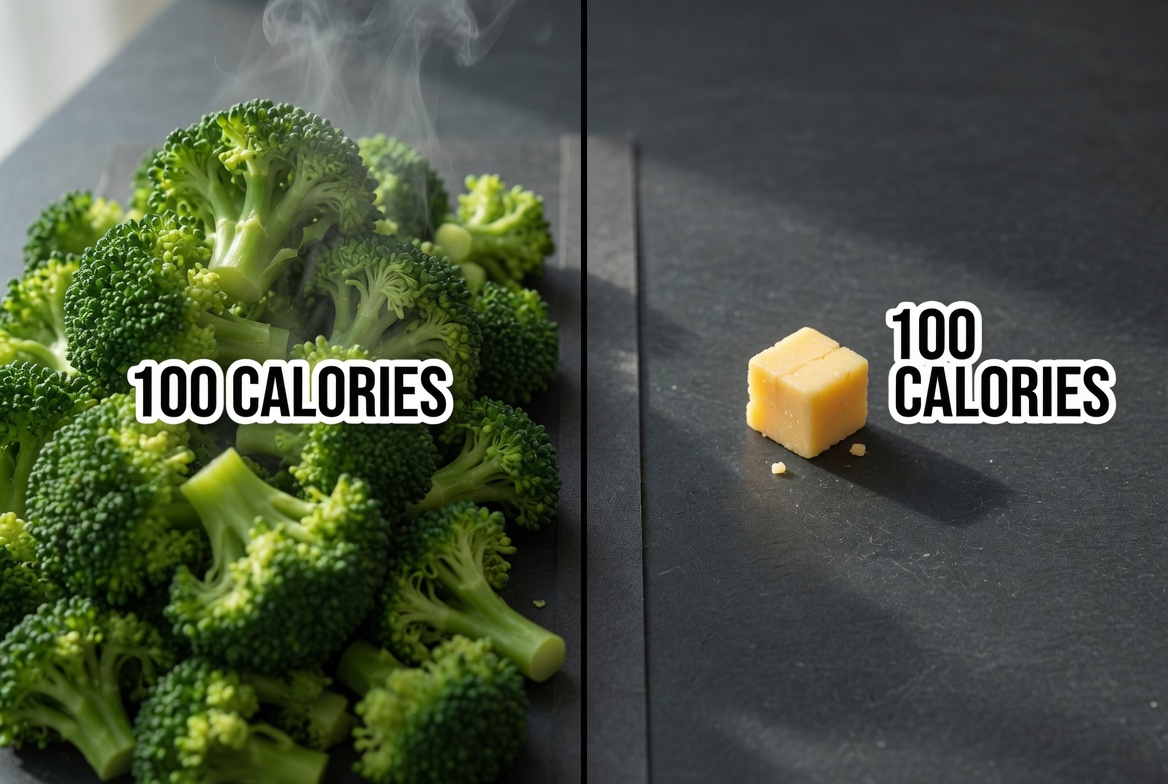
Water and fiber are the two biggest factors in calorie density. Foods high in both (vegetables, fruits, broth-based soups) give you maximum volume per calorie.
Calorie Density Comparison — Same Calories, Different Volume
Vegetables — Your Free Food
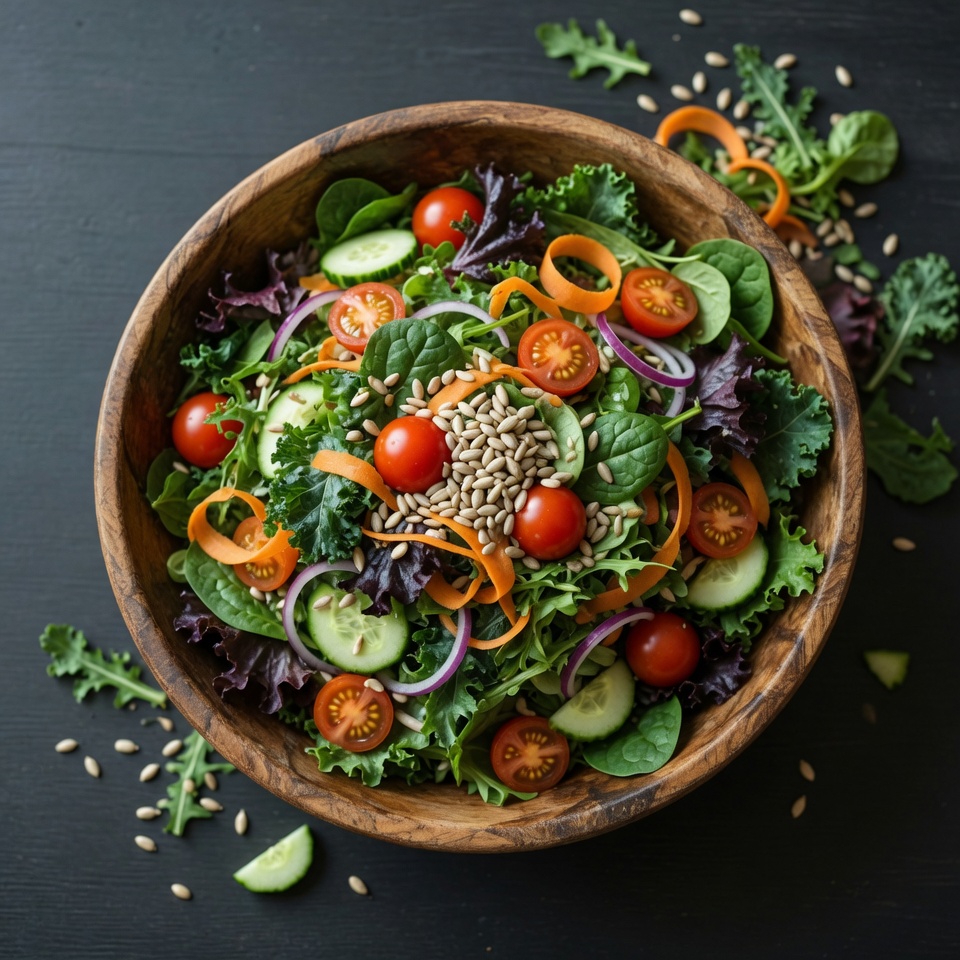
These are so low in calories that you'd struggle to overeat them. Eat as much as you want.
Broccoli
🥦Roast with garlic and olive oil spray. Turns a boring vegetable into a craving.
Spinach
🥬Seven calories per cup. Add a massive handful to every meal — you won't taste it.
Cauliflower
🤍Rice it, mash it, or roast it. The most versatile low-calorie vegetable.
Zucchini
🥒Spiralize as pasta substitute. 200 cal of pasta → 20 cal of zucchini noodles.
Bell Peppers
🫑Sweet, crunchy, and loaded with vitamin C. Slice and use as chip alternatives with hummus.
Mushrooms
🍄Add umami to anything. Sauté in a dry pan until golden — no oil needed.
Cucumbers
🥒96% water. Slice thick, add salt and everything bagel seasoning. Better than chips.
Cabbage
🥬Possibly the cheapest vegetable per pound. Shred for salads or sauté as a side.
Celery
🥬Six calories per stalk. Dip in 1 tbsp peanut butter for a 100-cal snack that feels substantial.
Fruits — Nature's Dessert
Higher in sugar than vegetables, but the fiber and water content make them excellent volume foods. Way better than any processed sweet.
Watermelon
🍉92% water. An entire cup for 46 calories. The ultimate summer volume food.
Strawberries
🍓Pair with Greek yogurt for a high-protein, high-volume dessert under 130 calories.
Apples
🍎4.4g of fiber per apple keeps you full for hours. The crunch satisfies the urge to snack.
Blueberries
🫐Antioxidant powerhouse. Frozen blueberries are cheaper and just as nutritious.
Oranges
🍊Eat the orange, don't drink the juice. Juice removes the fiber and concentrates the sugar.
Grapes (frozen)
🍇Freeze grapes for a candy-like snack. They take longer to eat, so you naturally eat fewer.
The Volume Plate Method
Build every plate like this and you'll naturally stay in a deficit:
- 50% vegetables — Fill half your plate with the low-calorie options above
- 30% protein — Chicken, beef, fish, eggs, Greek yogurt
- 20% carbs/fat — Rice, potatoes, bread, oils, cheese
This naturally creates a 400-600 calorie meal even on a large plate. No counting required.
Volume Eating Kitchen Tools
OXO 3-Blade Spiralizer
Tabletop spiralizer, about $44. Spaghetti, fettuccine, and ribbon blades. Zucchini noodles and curly fries.
View product →Large Salad Spinner
Pre-wash and dry a week's worth of greens in minutes. Dry greens last 5x longer in the fridge.
Shop on Amazon →Vegetable Steamer Basket
Steaming preserves nutrients and adds zero calories. 5 minutes for perfectly crisp-tender vegetables.
Shop on Amazon →Large Mixing Bowls
Volume eating means big salads and big stir-fries. Oversized bowls make it easy to build 3-cup+ vegetable portions.
Shop on Amazon →As an Amazon Associate, I earn from qualifying purchases. Product links on this page are affiliate links — they cost you nothing extra.